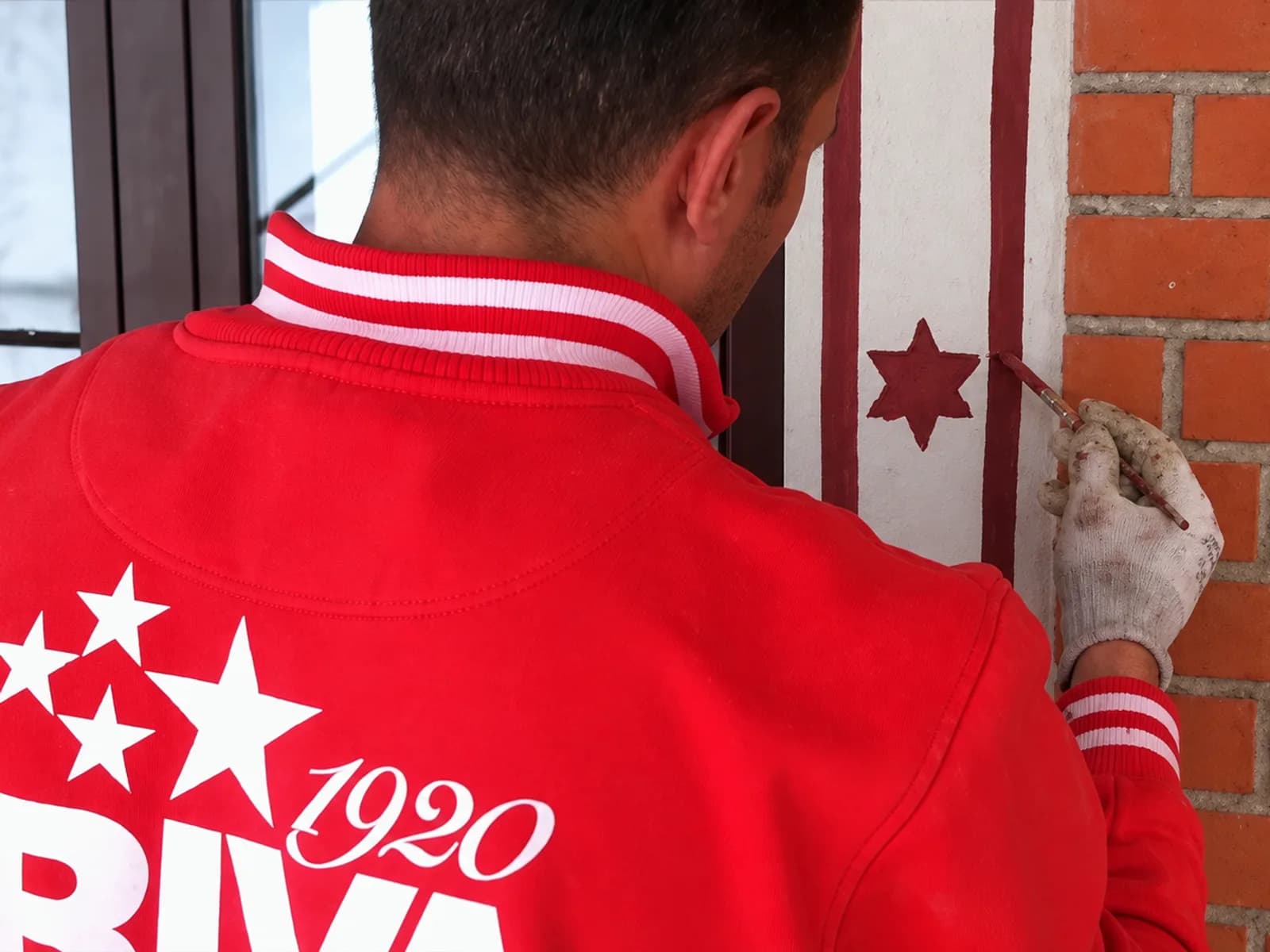
A sustainable-impact worksite, Silver level
Conservation is in itself a sustainable act: caring for what exists instead of demolishing and rebuilding. The firm has chosen to turn this principle into verifiable commitments, in its offices and on its sites, and to join recognised protocols.
Renewable energy in the offices
The firm’s offices are powered entirely by renewable sources thanks to the agreement with Repower: a supply covered by double certification, the Guarantee of Origin issued by the GSE and the certification of origin issued by TÜV SÜD.
The «Cantiere Impatto Sostenibile» protocol
The firm has signed up to the «Cantiere Impatto Sostenibile» code of conduct, structured in eight commitments: sustainability, decarbonisation, protection of the environment, legality, dignity of work, social responsibility and responsibility towards the supply chain. Following the positive opinion of the Technical Operating Committee, the site at corso Buenos Aires 1 in Milan was awarded the Sustainable-Impact Worksite certification at Silver level.
On its sites the firm works to improve the thermal insulation of buildings and reduce their consumption, to power operations with renewable sources where possible, and to cut waste and recycle discarded materials.
Maintenance as a strategy
The guiding principle remains the one the firm has always repeated: «the best restoration is the one that does not have to be done». A paradox that points to the importance of programmed maintenance: if historic heritage is cared for constantly, radical interventions for neglected and sometimes incurable pathologies are not needed. This is why RIVA always hands over, at the end of the works, a maintenance booklet for scheduled checks of the building, and favours a minimal-restoration approach that preserves the original structures as far as possible.
Territory and training
Sustainability is also social: the firm works with local communities for the conservation of their heritage and trains craftsmen specialised in sustainable restoration. Monitoring the environmental impact of projects and seeking ever more efficient solutions is a commitment that does not end with the handover of a site. The firm’s stated aim is to combine the protection of the past with the needs of the future: restorations that respect the environment, the urban fabric and the historical memory of buildings, and that add value for society as well as for the individual client.